24-bit or 32-bit float?
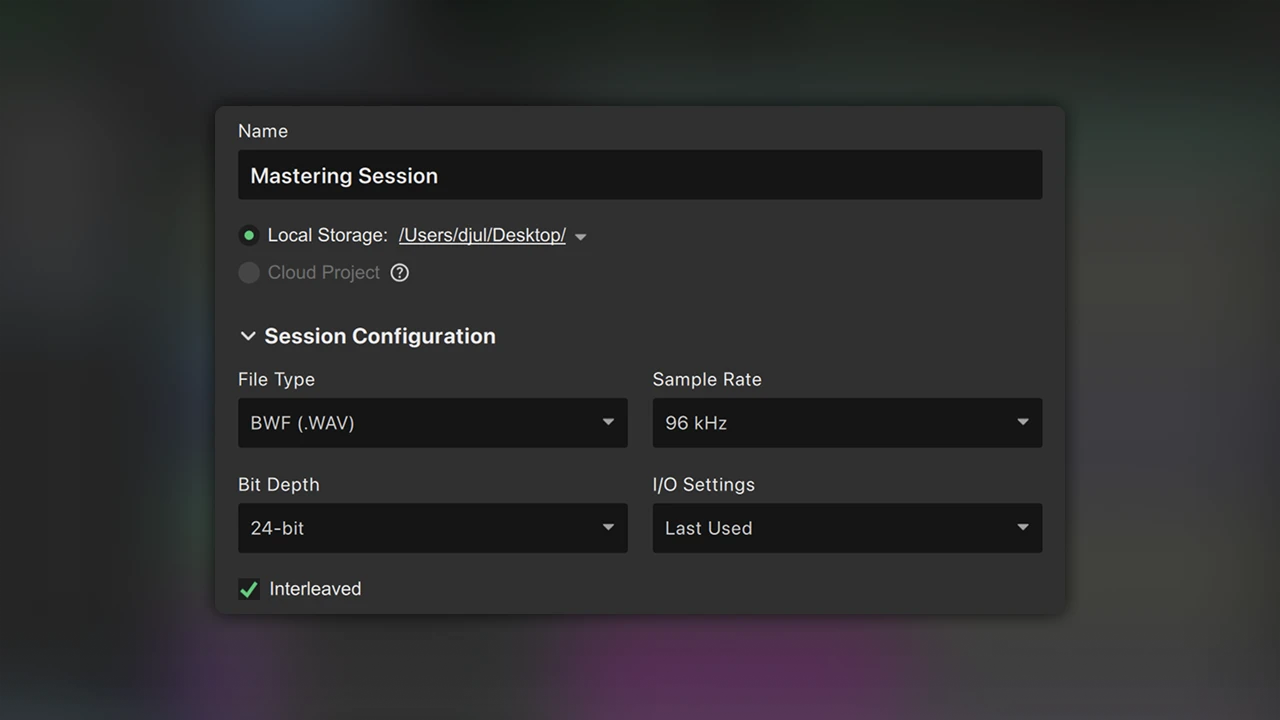
It’s not unusual for me to receive mixes at the studio that do not appear to clip in any obvious way in the mix engineer’s or producer’s session, yet end up clipping once exported as 24-bit files. The reason is fairly straightforward: as long as a signal remains within the DAW’s internal processing environment, some peaks above 0 dBFS can still be corrected simply by bringing the level down. But if that overshoot is still present when the signal is exported to a 24-bit file, it has to fit back within a fixed scale. And if it still exceeds the highest value that can be represented at that stage, clipping becomes unavoidable.
To my mind, situations like this mainly reflect an incomplete understanding of how a DAW and its file formats each handle level, and of the limits that reappear at export stage.
Because depending on the context, we are not quite talking about the same thing: the bit depth of the audio file, or the internal precision of the audio engine. These ideas are related, of course, but they do not describe exactly the same reality. In practice, that distinction matters.
What does bit depth actually describe?
Put simply, bit depth describes how a digital signal represents amplitude. But that does not mean exactly the same thing when you are dealing with a fixed PCM format such as 24-bit, as opposed to a floating-point format such as 32-bit float.
In a 24-bit PCM file, each sample is represented on a fixed scale. That means there is a defined number of possible values, 2^24, or 16,777,216, spread linearly between the lowest and highest values that can be represented. In this context, bit depth determines both the resolution of that representation and the available theoretical dynamic range. That is why 24-bit is often associated with roughly 144 dBFS of theoretical dynamic range, based on the familiar rule of around 6 dB per bit. Here, we are indeed talking about dBFS, meaning a scale referenced to digital full scale.
32-bit float works differently. It does not rely on a simple fixed scale of levels. Its representation is closer to a form of scientific notation: one part of the value describes the precision of the number, while another describes its order of magnitude. Put another way, the system stores not only how much, but also at what scale.
That is the crucial point.
Because of this structure, a 32-bit float working environment can represent values well above 0 dBFS without immediately clipping them. As long as the signal remains within that calculation space, an overshoot can sometimes still be recovered later simply by bringing the level back down.
By contrast, when a signal is exported to a fixed format such as 24-bit PCM, it has to fit back within a limited scale. If the level still exceeds the highest value that can be represented at that point, clipping becomes real and permanent.
In other words, 32-bit float does not magically eliminate all risk of distortion. What it really does is allow the DAW to handle levels with far more flexibility while the signal remains inside its internal audio engine. And it is precisely this difference between a fixed scale and floating-point representation that explains why a mix can still seem usable in the session, then clip once exported.
File bit depth
Today, 24-bit PCM and 32-bit float are both widely used, but they do not serve exactly the same purpose.
24-bit PCM remains a standard format for many common uses: track exports ahead of mixing, stems, the mix export before mastering, and the final master intended for streaming platforms.
32-bit float is more suited to files that are still part of an ongoing workflow. It preserves greater scope for recovery when level adjustments are needed after export. That is also why many mix engineers now deliver files in 32-bit float, including at the mastering stage.
The internal precision of the DAW audio engine
The bit depth shown for an audio file does not necessarily describe how a DAW processes signal internally. In many modern applications, the audio engine runs in 32-bit float, and sometimes in 64-bit float for certain stages of calculation. That changes the way levels are handled during mixing quite significantly.
In older systems, or in more constrained processing architectures, an overload could much more easily produce saturation or clipping within the audio engine itself. The move to floating point brought much greater flexibility. As long as the signal remains inside that internal calculation space, a temporary overshoot above 0 dBFS can sometimes still be recovered later in the chain simply by turning the level down.
The DAW’s audio engine can tolerate internally certain values that a 24-bit PCM file simply cannot represent.
That flexibility should not, however, be mistaken for an aesthetic improvement in itself. It mainly makes the calculations more forgiving. It does not remove the limits of the final format, and it does not remove the need to keep proper headroom throughout the process.
Maintaining headroom from start to finish
It is useful to know that a modern DAW may be working internally in 32-bit float. But that is not a reason to use up all the available margin, or to let a mix run past 0 dBFS on the assumption that it can always be fixed later. The margin provided by 32-bit float is a calculation safety net, not a gain-staging strategy.
In practice, the solution remains simple: keep headroom at every stage.
That starts at the recording stage, with sensible levels and enough margin to work comfortably. It continues through mixing, where the goal is not to push the mix bus as hard as possible, but to preserve a signal that remains clean, readable and workable for what comes next.
That does not mean a mix has to remain polite, lightweight or underworked. On the contrary, a mix can already be highly developed, with dense vocal or instrumental buses, deliberate compression, and processing that brings focus, colour or character, including through digital tools inspired by analogue hardware such as the LA-2A, the 1176 or the Zener Limiter.
So the question is not whether to avoid density, but where that density actually sits.
A mix can be compact, energetic and already very musical without having to hit 0 dBTP at the output. Useful headroom should remain clearly visible at the mix bus output. In other words, overall dynamics are not determined by the DAW’s output level alone. They also depend on how the buses balance against one another, the hierarchy between elements, and the level decisions that genuinely shape the mix.
A word on LUFS
Since we are talking about level, it is worth briefly clarifying what LUFS actually measure.
LUFS, or Loudness Units relative to Full Scale, do not simply measure an instantaneous peak. They measure overall perceived loudness over time, in a way that is closer to how we actually experience sound. That is what makes them useful in mixing, particularly when judging whether a track has already been pushed too far in terms of overall density before it even reaches mastering.
At this point, it is helpful not to confuse them with other reference points:
dBFS: digital level relative to the maximum possible value
dBTP: an estimate of true peaks, meaning the real peaks that may occur between samples
LUFS: a measure of perceived loudness over a short or long period
So LUFS do not replace peak metering or true peak control. What they do provide is a very useful reference for deciding whether a mix has already been pushed too far in terms of overall level.
During mixing, keeping the overall level within a sensible range, for example around -14 to -16 integrated LUFS on a dense production, will often preserve healthier headroom and make the next stage easier to approach.
That said, this should not be taken as an invitation to make a mix timid, thin or lacking in substance. A Mix can absolutely remain dense, controlled and already full of character in that range, provided that density comes from real work on balance, compression, texture and hierarchy between elements, rather than simply from pushing the mix bus output too high.
Julien Courtois